


“And when the deep and ruthless winter capped the cloud- wreathed tor with snow, and the loud highland tempest howls, he heard and shudder’s yet a desperate race, men of all climes - attached to none, were here”
Dartmoor - A descriptive Poem, Nicholas Toms Carrington
Just before Christmas, I was busy selling my prints and calendars at a local craft fair.
Amongst the heady scent of woodsmoke and mulled wine, a convivial festive atmosphere was developing, buoyed by the crisp winter weather, and perhaps the fact I was set up in a manger (OK, it was a stable but as I don't know the technical difference between a stable and a manger, I’m going to run with it!).
After a while, I started to notice an interesting pattern building amongst my Christmas customers. My work tends to focus on a broad range of locations across eastern and central Dartmoor, but these festive shoppers seemed to be drawn to one location in particular. It dominated conversation. People wanted to know where it was, how to get there, when to visit. A few even wanted to tell me their favourite spots and views. So great was the interest in this place, I decided it might be time it had its own blog, and so for our next photographic expedition, we are setting off for the area named by William Crossing as “Tor Hill”
Dartmoor is inundated with place names that evoke history, folklore and things much older than our modern quick fix brains can comprehend. Wodins Way, The Miller’s Mile, The Watching Place, Five Wyches Cross and many more, contribute to the broad tapestry that reminds us we are merely the current custodians of this ancient wild place. It is therefore, a sad fact that the imaginatively named B3387 adds little to this rich pageant, but it is from here that we shall base ourselves for an exploration of the many photographic opportunities found in this often overlooked area.
I consider myself very fortunate to live close enough to spend my days on the moor. As I’ve explained in other posts, photography on Dartmoor rarely happens by chance. Shots are planned depending on weather, seasons and the position of the sun. Sometimes though, the pressures and commitments of real life mean that I only have time to grab the camera and my only option is to nip out for a quick spur of the moment sunset. When this happens (or when other locations have failed to work out as expected) I often gravitate to an area I know well. There is convenience in this of course, but also the unintended consequence of complacency and I often end up taking a location for granted - I stop seeing it as others do, and this, I guess, is why I was so taken back at the interest Tor Hill gained at the Christmas market.
I'm going to keep using the term Tor Hill, to collectively describe quite a large area that is bordered to the east by Hemsworthy Gate and Cold East Cross, to the west by Widecombe-in-the-Moor, to the south by Blackslade Down and to the north by the romantic B3387. You might know it better as “that bit between Haytor and Widecombe”. Access here is some of the easiest on the moor and when combined with historical interest, far reaching views, seasonal colour, a bronze age cairn and of course several iconic tors, it is easy to see why this spot is a must for those starting out on their Dartmoor photography journey.
For those less accustomed to exploring the moor, many locations can seem intimidating - remote landscapes, tiny winding lanes, no facilities, no mobile phone reception; this can be a real barrier to some (and of course the main attraction for others!). But if you can identify with these concerns, the Tor Hill area is for you. Access is from an easy B road that is gritted in winter and has plentiful parking. There is good mobile phone reception and there are toilet facilities at both Haytor and Widecombe, with the latter also boasting excellent cafes and pubs tool.
The first spot to explore is the most obvious. Top Tor and Pil Tor are some of my favourite tors on this part of the moor. They are rather overshadowed by their more imposing neighbours - Saddle Tor, Rippon Tor, Haytor and Hound Tor - but from a photography perspective, they offer repeat opportunities throughout the year. From the B3387, park at either the Hemsworth Gate car park (for a slightly steeper climb) or a little further along, just after Harefoot Cross and before the road descends to Widecombe; and follow the obvious paths up the slope towards the rocks - no more than a ten minute walk at best. The first tor you come to is Top Tor (Crossing tells us it was pronounced “Tapter” but you need a fairly broad Devonian accent to make that work). To be fair, the actual tor is not spectacular - more a pile of rocks - and I have never managed (or really attempted) even one decent image of the tor itself, but there is much more to be had here if you look.
Firstly, and in keeping with my blogs on Yar Tor and Combestone Tor, there are the far reaching views. You really have a lot of choice here - look north and shoot towards Hound Tor and the imposing Hamel Down, look east and shoot Haytor and with the right lens and careful composition you can even get the sea in the background. Look west and shoot towards Widecombe and the distant peaks around Princetown. Top Tor is relatively exposed, so benefits from largely unobstructed sunrises and sunsets - it's a good location for both and you can get some really nice images with just your smartphone, but there are a few really interesting compositions here that I would like to take some time to suggest.
Silhouette Sunrise. I’ve had some great results using a technique that involves positioning some of the iconic grand tor silhouettes against the rising sun. The most obvious of these are the distinctive outlines of Haytor and Saddle Tor. Depending on the time of year, these line up perfectly from the slopes of Top Tor (or even from Hemsworthy Gate) with the rising sun backlighting your shot adding punch and drama. You’ll need to work out what you want to feature in your composition and then calculate the sun’s position to work out where to stand (I use the SunCalc app for this - Click here for desktop version). It really does vary throughout the year - from this position it rises in the south-east in January, but by July it is rising in the north-east! Generally I stand somewhere between the tor and the car park at the top of Widecombe Hill.
This type of shot is great for practicing a technique known as the starburst effect. Here, the aim is to capture the sun in a manner that projects a star-like burst across your image. To do this, first select a small aperture setting (a high f-number such as f16 and upwards). The blades of the aperture bend the light and cause the starburst effect when the aperture is small - if the aperture is too big (a low f-number) you’ll just flood the camera with light and ruin the scene. Next, set your ISO to around 100 to keep any noise out of your shot, and then position the sun so that it is at least half obscured by the subject you are silhouetting. This is important - the technique only works if the sun is partially obscured. This may sound overly technical but really it isn't - just think of it as line the sun up with your subject, shoot in aperture priority (“A” on most cameras), set your ISO to 100 and then compose so the sun is partially hidden by your subject. It may take a bit of trial and error to get your composition lined up and your aperture set so that the sun burst effect is big enough without being overpowering, but that is the joy of photography. A last note - it may sound obvious but be careful when doing this. Looking down a viewfinder directly at the sun could cause you permanent eye damage, so it's always best to shoot through a screen instead - either on the screen in live mode on a DSLR, or through your smartphone.
Mist. The traditional misty scene is usually shot in woodlands or rivers, but Top Tor is a great location for some open moor mist. Surrounded by valleys, you can get up nice and high and pick out some really interesting compositions. I like to shoot north if the conditions are right.
Of all Dartmoor’s tors, there is something distinctly primal about Hound Tor, not just for its inspirational links to Conan-Doyle’s legendary beast, but as the site of human settlement dating back to the bronze age. To me, there is such a sense of time and place when its ancient silhouette is shrouded in mist, and Top Tor is just the place to capture it. You’ll need a tripod and a longish lens (somewhere between 150mm and 300mm or greater) at this distance, but it really looks great at dawn.
An alternative scene that can be captured with any lens or smartphone from exactly the same spot, is just to the east of Hound Tor. Look for where the land dips between Saddle Tor and Hound Tor and you’ll see the Becka Brook river valley. At dawn in the autumn, this often fills with mist and because it runs to the north, you get the benefit of soft side lighting flooding in from the rising sun.
The Holy Grail. OK, my holy grail. I call it that because it's a shot I seek, but have never actually found! It involves mist again, but this time looking to the west. I was inspired by a wonderful photograph I once saw, taken by the photographer Adam Burton. In it, he has captured the tower of St Pancras Church rising from the mist in pastel purple pre dawn light. Widecombe sits in a deep valley so mist is very common, but try as I might, I’ve never managed to get the conditions to combine correctly to attempt the shot. You’d need to set up from Top Tor with a long lens (around 200mm or higher) and the weather needs to be misty but not foggy (i’d suggest a cold clear night after a period of rain). I wish you luck with that one and if I ever capture it, I’ll be sure to share it widely!
But what of the tor itself? We’ve already established that it's not that photogenic, but spend some time looking at the rocks that litter its base. Here, there are some really interesting shapes and I’ve used many of these unnamed boulders as the subjects of cards and prints - one even making it to the cover of my 2025 Scenic Dartmoor Calendar (usually reserved for my favourite shot of the year).
Leaving Top Tor, a series of livestock trails lead us south towards a far more prominent and impressive granite formation a short walk away. This is Pil Tor and when I said at the start of this blog that these tors were some of my favourites, I was really only referring to this one.
I love Pil Tor. It’s so accessible and like many of Dartmoor’s tors, has several faces. When approached from Top Tor, it is bold and striking, looking defiantly west and weathered smooth by 300 million years of prevailing wind. From this angle you get a nice contrast - the brutality of the granite against the more pastoral backdrop of Dunstone in the middle ground, framed and contrasted again by the raw wilderness of Holne Moor beyond. When the conditions are frosty, the patchwork of frozen fields and hedges in the mid ground look great against the tor acting as your foreground anchor. My favourite though, is the heather and gorse season and there is always a magnificent display between the two tors. Use the livestock trails as leading lines drawing you through the heather towards Pil Tor and shoot at sunset to give the golden sidelighting that works so well against the yellow of the gorse.
Pil Tor is actually two separate lumps of granite and the cleave between the two gives you another interesting composition looking west through the rocks. Light can be tricky here - shoot at sunrise and the sun is at your back casting shadows, shoot at sunset and you are looking straight into the setting sun. Early evening works best when the light is soft but not too direct, and you can use Tunhil Rocks (to the west of Pil Tor) as your focal point.
The far side of Pil Tor (the side furthest from Top Tor) is more wild, the rock formations more rugged, and seems to be the favourite hang out for sheep (if the quantity of poo is any reliable indicator, it seems this may be the most popular spot on the entire moor!). Ponies often frequent the rocks too, as do birds, with Rock Pipit, Meadow Pipit and Stone Chat regularly seen feeding here. Photography is often fast paced, chasing the weather and light at breakneck speed, so for a different type of shot, take some time to set up and just watch and listen to this wonderful cast of characters who call these rocks home. Work on your portrait photography - usually best with a longer lens and big aperture setting (low f-number) to keep your subject sharp and your background intentionally blurred. This is known as depth of field.
But it's not just the tors that we can photograph in this area. Once you have explored this area fully, head back to the car park at Hemsworthy Gate, as we turn our attention to some truly interesting subjects.
About 500m along the road that heads from Hemsworthy Gate to Cold East Cross, and Ashburton beyond, lies a collection of stones. They don't look natural. They are angular and clearly hewn from the local granite. Some have notches and grooves, most stand vertical and in many ways are similar to the many cairns and standing stones found all over the moor. But this is not an ancient or sacred site. It was used for worship, but it’s Gods were barley, apples and hops and the ceremonies involved drinking not praying. For these are the remains of the Newhouse Inn, a hostelry that once served as the watering hole for farm labourers driving their wagons along the busy trade route from Chagford to Ashburton. In his Guide to Dartmoor, William Crossing paints the scene:
“In the days when woollen manufacture at Chagford was in a flourishing state, wagons from the factory there often passed this way.. In the morning, the farmers men who came to fetch [the lime from Ashburton] would drive at a rapid pace in order to reach the kilns as early in the day as possible, and thus avoid being kept waiting for their load. Then they would get on their way and waste at Newhouse, the time they had saved by being early at Ashburton. It was quite a common thing, at certain times, to see large numbers of carts drawn up in the road near this solitary inn, while their drivers quenched their thirst within”
One might reasonably wonder why such a successful inn would have fallen to ruin, and Crossing theorises that it may have been a victim of its own success - the farmers, having become so fed up with their labourers wasting the day in the pub, they took matters in their own hands and burned it down.
Whilst the loss of the inn would have been mourned by its many patrons, the remains have left behind a small but mighty legacy for the photographer.
It’s probably the most accessible location on the moor - you literally pull in right next to the stones (although there is only room for one vehicle so if someone else gets there before you, you’ll need to walk). Once on location, you have your choice of stones for your composition. Remember, these stones aren't natural - they are placed by human hands and represent the pillars and lintels of the old inn, now lost to time. Because of this, their positioning rather limits your options, directing you to a few obvious angles. You shoot facing west, so this is a fantastic location for sunset (don't bother with sunrise, Rippon Tor hides the rising sun until it's far too high, by which time the light is too harsh) and you can get some great colours as the sun sinks behind Top Tor. For added interest, a fallen tree lies just behind the stones - not dead, still growing, adding a twisted vision of life to this silent and eerie spot.
I absolutely love sitting amongst the stones waiting for the summer sun to set, listening to the sounds of the moor settling down for the night - a curlew in nearby Blackslade Mire, the sheep settling (and probably still pooing) on Pil Tor, the quiet hush of the odd car as the last day tripper heads home, the cry of a stallion running with his herd. And if you listen hard enough, I sometimes swear you can hear the clunk of tankards and the drunken signing of songs that are soaked into the fabric of these ruins - now relegated to silent observers of a million Dartmoor sunsets.
The ruins can be shot equally well with a DSLR or cameraphone. Because you can get up so close, and because they are not that tall, a cameraphone works just fine here - the principles of light and composition apply equally well, whatever you use to take your shots. If you do use a DSLR, I do find that distance is a bit of an issue. The stones are right by the road, so you have to shoot them from quite close. This limits your focal range, and I tend to use a 10 -18 mm wide angle allowing me to get really close to the stones whilst also getting as many of them in the scene as possible.
Spend some time here, and enjoy the peace of a sunset, but please respect it. Whilst it isn't a holy site, I have seen many people pull their cars right up to the stones, leaving litter, jumping on the fallen tree and scorching the grass with BBQs. It's a place that meant something to people once, and it should always be respected as such.
We end our trip with ruins of a much older site. Almost adjacent to Hemsworthy Gate (literally across the B3387 from the car park) lies a well preserved prehistoric cairn. It is believed to date back to the bronze age and whilst its exact purpose is unknown, it is widely believed to hold a burial chamber underneath. Going by the more modern name of Seven Lords Land (which Crossing describes as “being, it is said, a bond mark of seven manors”), the shot of the cairn is tricky to compose. It lies quite close to a dry stone wall against which it can get lost, but perseverance is worthwhile. As with much of Dartmoor, it comes to life in late summer where it is enveloped in a literal sea of gorse and heather - indeed one of the finest small concentrations I have found anywhere on the moor. Shoot from quite a high position, to make the most of the Saddle Tor / Haytor backdrop, and I would suggest the best time is the golden hour just before sunset, with the setting sun illuminating the cairn (and therefore lighting it up against the darker stone wall) with the gorse really popping in colour and the tors beyond bathed in warm summer light.
Whilst these locations work all year round, I want to end this blog talking about snow. There is no doubt that snow on Dartmoor presents the ultimate opportunity for the landscape photographer, but it comes at a price. Dartmoor is bleak, and ice, snowdrifts and hazardous driving conditions are common. Snow can come from nowhere and bank up quickly - Once I was pulled over in my van and had just lit the stove to make a pot of tea when it started to snow. In the time it took the kettle to boil, the road had become completely covered and I only just got out in time. For me, this is where the Tor Hill area comes into its own.
Haytor is the magnet when it snows and the vast majority of visitors don't venture past it. But the B3387 is a main route and is almost always gritted, meaning that you can drive further with confidence, easily reaching the quieter parking locations around Hemsworthy Gate and Widecombe Hill with confidence. From there, you can easily walk to all the locations covered in this blog, or down to Bonehill rocks for a different view. I have spent whole afternoons shooting hundreds of snowy images in these locations, and the views, the compositions and the light have never let me down. So if you are looking to get out on the moor with your camera in the snow, but don't fancy getting stranded or paying huge car bodywork bills, this could be the ideal location to try.
Before we leave this area, there is one oddity that is worth checking out. If you park at the car park at the top of Widecombe Hill and look towards Top Tor the nearest rocks to you (just to your right) don't appear to have a name. But go and visit them - there is one rock there that I love more than probably any other. To me it looks like a troll - a squashy face and over bite and it even has a fuzzy covering of grass for hair. I wish it had a name, but I don't think it does, so I just call it the Top Tor Troll - go and find him, he's a great character to photograph.
I hope this post has given you some ideas. Whether you are interested in history, photography or just looking for a quick spot to walk the dog, Tor Hill is a place I would suggest you try and if you have some favourite views in this area, please pop them in the comments below.

Sunburst - Saddle and Haytor, September 06:15, 45mm, f32, ISO100

Pil Tor winter sunset, January 16:15, 24mm, f13, ISO160

Newhouse Inn sun burst, May 19:30, 12mm, f22, ISO100

Top Tor rocks at sunset – December 16:00, 49mm, f5.6, ISO100

Primordial Saddle Tor – September 06:30, 160mm, f16, ISO100

Deep snow on Top Tor – December 15:45 41mm, f8, ISO100

Early autumn mist over Becka Brook - October 19:30, 120mm, f36, ISO100

The Top Tor Troll - June 19:45, 18mm, f3.5, ISO100

Hound Tor emerging from the mist (shot from Top Tor), October, 07:50, 240mm, f6.3, ISO100

Snow clouds over Blackslade Down, December 15:15, 200mm, f8, ISO100

Hound Tor from Top Tor, November 14:30, 300mm, f5.6, ISO100

Snowy Saddle Tor from Top Tor, December 14:00, 205mm, f25, ISO100

Hard frost on Pil Tor, January - 08:50, 25mm, f25, ISO100

Ponies in the snow on Blackslade Down, December 15:30, 75mm, f4, ISO125

Saddle Tor inversion, October07:45, 100mm, f8, ISO100

Heading Home - Pil Tor, December 15:30, 255mm, f5.6, ISO100
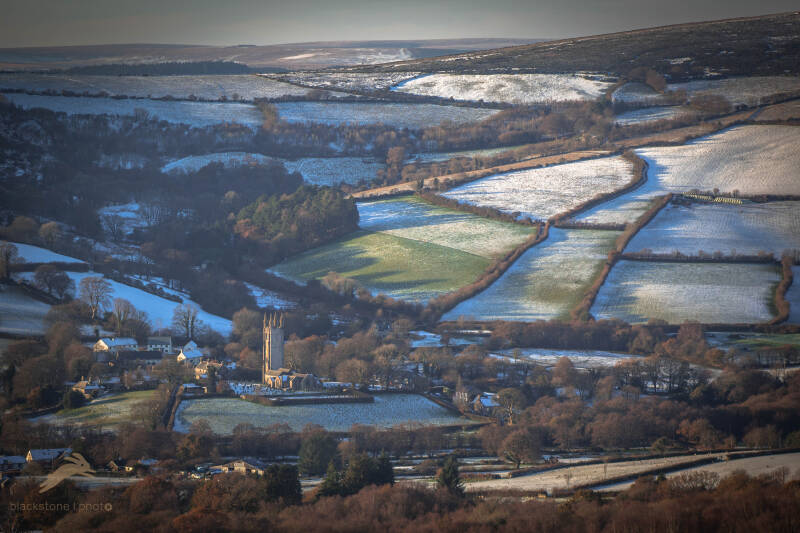
Widecombe in the snow from Pil Tor, December 15:00, 100mm, f4.5, ISO100
Add comment
Comments